



Ultra-Trail Fueling: Why Synthetic Gel Accumulation Burdens Metabolism | BananaGO

The Challenge & Peer-Reviewed Clinical Findings
A study published in the International Journal of Sport Nutrition and Exercise Metabolism ↗ found that ultra-endurance athletes consuming synthetic maltodextrin-based gels over 12+ hours reported progressively worsening gastrointestinal distress, correlating with cumulative additive load rather than single-dose intolerance. In races like UTMB, where runners may consume 25-40 gels over 100 miles, this accumulation becomes a real metabolic liability.
“After 20 hours in the mountains, your gut doesn’t want more chemicals. It wants real food it recognizes. That’s when I reach for something closer to what I’d eat at home.”
— Kilian Jornet, Multiple UTMB Champion, Ultra-Trail World Tour Record Holder
Direct Scientific Takeaway: Repeated ingestion of refined sugars, artificial flavoring agents, and thickeners over multi-hour ultra events compounds hepatic and renal processing demands, unlike whole-food matrices which the body metabolizes via familiar enzymatic pathways. Athletes exploring why chemical gels cause nausea will find parallel mechanisms at play in ultra-distance racing.
Biochemical Breakdown: Splanchnic Hypoperfusion & The Failure of Synthetic Gels
During sustained high-output trail running, blood flow is preferentially shunted to working muscles and skin for thermoregulation, reducing splanchnic (gut) perfusion by up to 80%. This ischemic gut environment struggles to process concentrated osmotic loads from synthetic gels, often marketed with heat-processed claims that strip away natural enzymatic cofactors. The result: delayed gastric emptying, reflux, and a growing pool of undigested chemical residue that the liver must eventually clear post-exertion, taxing recovery.
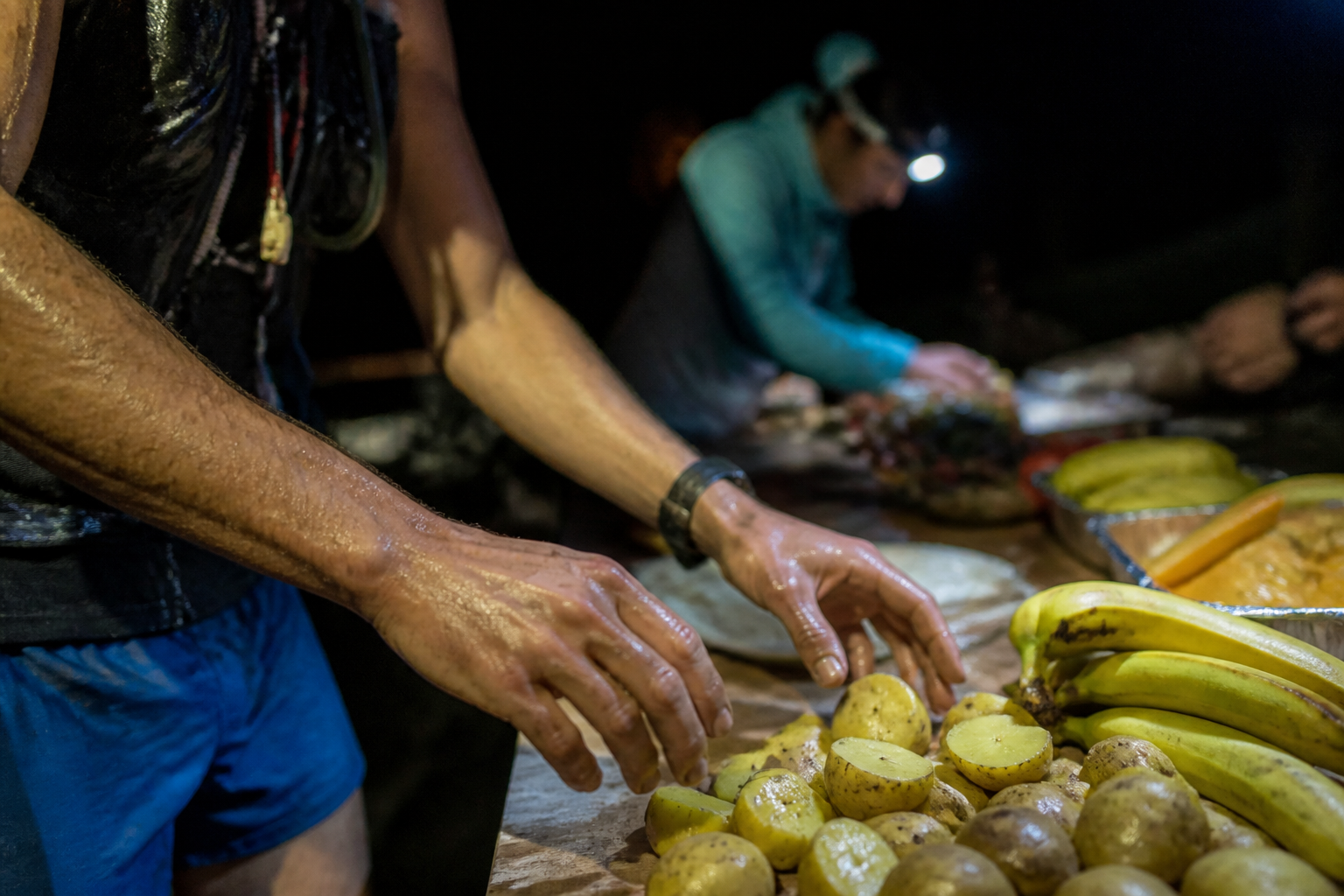
Unlike heat-dried or chemically stabilized alternatives, whole-food matrices retain their natural enzyme co-factors, allowing for gentler, more complete digestion even under ischemic gut conditions.
The Solution: 100% Natural Banana Concentrate Essence & The Overlooked Power of Potassium
BananaGO’s core equation is simple: 1 BananaGO = 1 Whole Fresh Banana, condensed via exclusive patented low-temperature manufacturing technology into a pocket-sized sachet — with 0 added water, 0 refined sugar, and 0 maltodextrin. This preserves the 100% natural banana concentrate essence, including its full electrolyte matrix.
While most commercial fuels obsess over sodium, they overlook Potassium — 98% intracellular and essential for the Na+/K+ ATPase pump that supports normal neuromuscular function and cellular electrolyte balance during sustained muscle contractions over 15+ hour efforts.
| Attribute | Synthetic Gels | Conventional Dried Alternatives | BananaGO | Cellular Impact |
|---|---|---|---|---|
| Base Ingredient | Maltodextrin/Syrup | Heat-degraded fruit | Whole banana essence | Enzyme retention |
| Sugar Ratio | High fructose skew | Variable/oxidized | ~1:1 glucose:fructose | Dual transporter use |
| Potassium Content | Minimal/absent | Degraded | Naturally intact | Na+/K+ pump support |
| Additives | Artificial flavors/thickeners | Preservatives | Zero additives | Reduced hepatic load |
| Long-Race Tolerance | Declines after hours | Inconsistent | Sustained comfort | Lower cumulative burden |
Field Protocol: Race-Day Timing & Hydration Strategy
For events exceeding 12 hours, rotate BananaGO every 45-60 minutes alongside water intake. Pro-Tip: Best paired with water for optimal flavor and enhanced absorption!
🔗 Related Sports Science Briefs:
- Road Cycling Fueling: Solving Aero Tuck Reflux on Alpine Climbs
- Pre-Marathon Energy Gel: Why Chemical Gels Cause Nausea
- BananaGO Science & Race Hub — Explore all clinical fueling guides
📚 Academic References & Literature Index
- Costa et al., 2023. Gastrointestinal Distress and Carbohydrate Gel Tolerance in Ultra-Endurance Athletes. International Journal of Sport Nutrition and Exercise Metabolism. [View on PubMed ↗]
Subscribe to “Real Nutrition Positive Energy”
Join thousands of endurance athletes. Get peer-reviewed sports nutrition breakthroughs and race fueling strategies every Tuesday. 100% free, zero spam.
100% privacy. You can unsubscribe anytime with 1-click.
📣 Found this sports science breakdown helpful? Share with your training squad:
FAQ
Why do synthetic gels cause more problems in ultra-trail races than shorter events?
Over 12+ hours, cumulative additive intake compounds gastrointestinal and hepatic burden, whereas short races expose the body to only 1-3 doses.
Is BananaGO a sun-dried banana product?
No. BananaGO uses an exclusive patented low-temperature manufacturing process, avoiding sun-drying or heat degradation, to preserve the 100% natural banana concentrate essence and its enzyme matrix.
Does BananaGO prevent muscle cramps?
BananaGO does not claim to prevent or cure cramps. Its whole-food potassium and magnesium support normal neuromuscular function and cellular electrolyte balance during sustained exercise.
How should I consume BananaGO during a 100-mile race?
Rotate one sachet every 45-60 minutes, best paired with water for optimal flavor and enhanced absorption!